
Pre-Migration Audit
Critical URLs, content assets, and dependency points are identified before transition.
WEBSITE MIGRATION SOLUTIONS
We manage website migrations across CMS and framework changes with a risk-controlled process that protects indexation, data integrity, and conversion flow.
MIGRATION ARCHITECTURE
We map source-to-target architecture, URL behavior, and content dependencies before implementation so migration risk is controlled early.
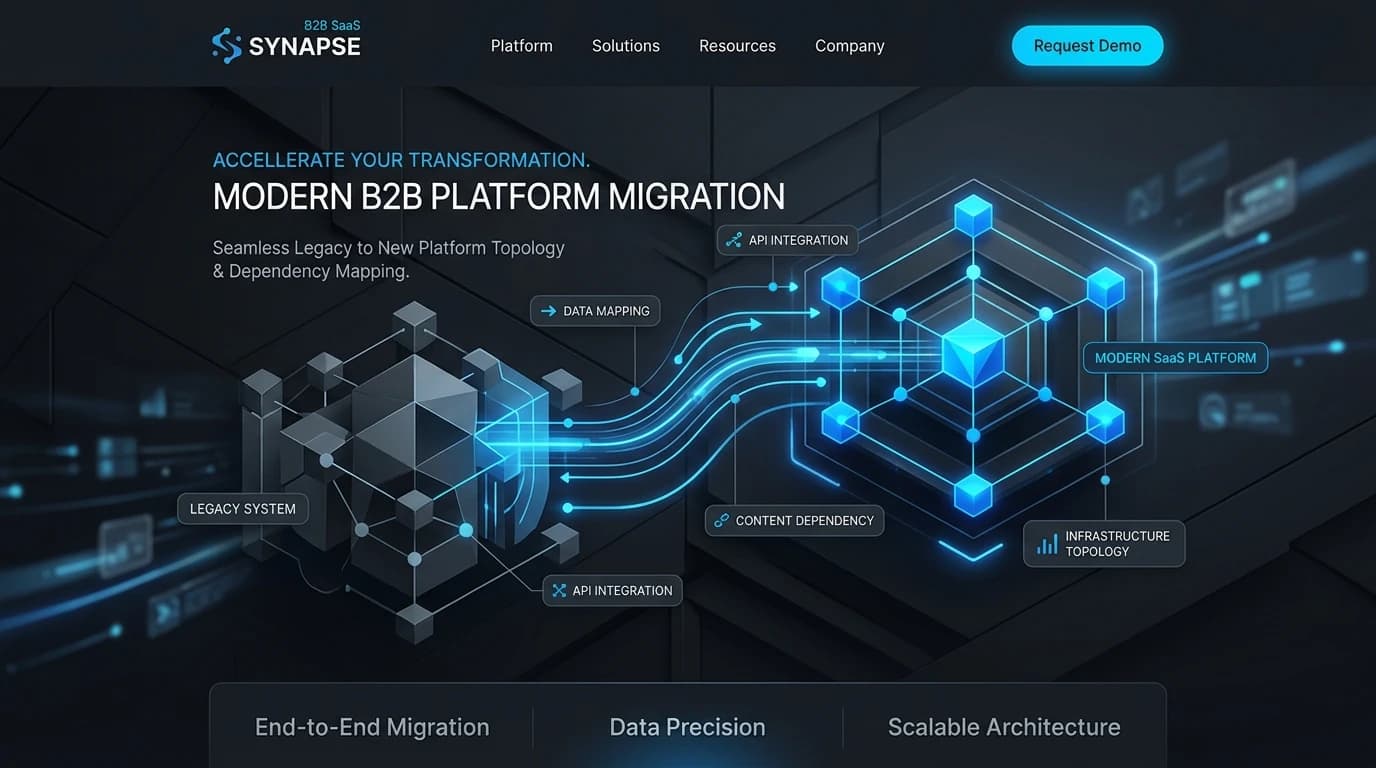
Critical URLs, content assets, and dependency points are identified before transition.
URL migration paths are designed to retain search equity and user continuity.
Navigation and contextual links are validated to prevent structural breakage.
Launch criteria are validated across crawlability, performance, and conversion paths.
PLATFORM TRANSITION
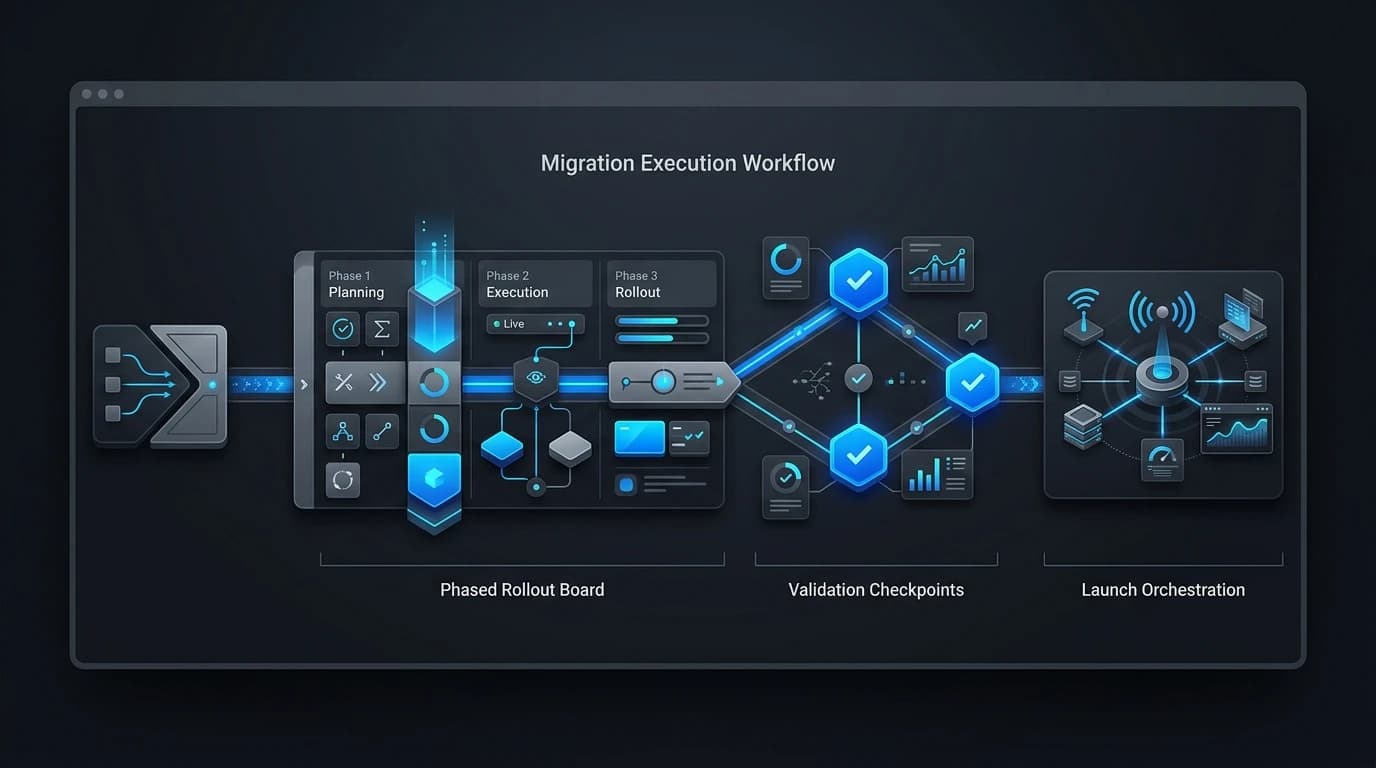
We coordinate migration milestones across engineering, SEO, and content teams so rollout sequencing stays aligned with business constraints.
POST-CUTOVER MONITORING
After cutover, we monitor indexation behavior, traffic patterns, and conversion quality to identify issues early and protect momentum.

These guides expand on the strategy behind this service and help connect the page to the broader content cluster.
cms migration checklist
Moving your website to a new Content Management System (CMS) is a major project. You might be upgrading for better speed, improved security, or a more intuitive user interface. However, a platform change also brings a significant risk. If handled poorly, a CMS migration can destroy years of hard-earned search engine rankings.

webflow to nextjs migration
Many businesses launch their digital presence using visual website builders. Tools like Webflow offer incredible speed and convenience for early-stage growth. You can drag and drop elements, publish pages in minutes, and avoid managing complex code repositories. It is an excellent starting point for establishing a brand online.

wordpress to headless migration
Traditional WordPress architecture has powered millions of websites over the last two decades. It provides a straightforward way to manage content, design pages, and publish articles all from a single dashboard. As organizations scale and digital touchpoints multiply, the limitations of a tightly coupled system become apparent. Websites can suffer from bloated code, sluggish page load times, and restrictive design frameworks that hinder growth.
WEBSITE MIGRATIONS FAQ