
branding for startups
Branding for Startups: Visual Identity That Builds Trust
January 8, 2026
Branding for Startups: Visual Identity That Builds Trust
Trust is the most valuable currency a new business can earn. When customers encounter a new company, they look for signals of reliability, professionalism, and quality. Before they read your mission statement or test your product, they see your brand. The colors, fonts, and logos you choose communicate volumes about who you are and how you operate.
Many founders treat branding as an afterthought, prioritizing product development and sales. However, visual identity serves as the foundation for customer relationships. A cohesive look signals that your business is established and serious. Disjointed graphics or amateur logos, on the other hand, can send potential customers running to your competitors.
Mastering branding for startups does not require a massive agency budget. It simply demands a strategic approach to visual elements and a commitment to consistency. By focusing on a few core principles, you can create a visual identity that resonates with your target audience and establishes lasting credibility.
Why a Strong Visual Identity Matters
Humans process visual information rapidly. Research consistently shows that users form an opinion about a website or brand within milliseconds. Your visual identity is your digital storefront. It tells the customer what to expect.
Securing Immediate Credibility
When a startup launches, it lacks the track record of an established corporation. Customers naturally feel hesitant to hand over their money or data to an unknown entity. Professional branding bridges this gap. A clean, modern aesthetic suggests that the team behind the product pays attention to detail. If your website looks secure and polished, users will assume your product functions exactly the same way, which is why early-stage teams often pair brand work with focused startup website strategy.
Differentiating Your Business
Markets are crowded. Startups often compete against industry giants and dozens of similar newcomers. Your visual identity helps you stand out. Consider how companies like Stripe or Airbnb disrupted their industries. They offered superior products, but they also introduced distinct, highly recognizable design languages that made them memorable. A unique visual approach helps potential buyers remember you long after they close their browser tabs.
Core Elements of Your Startup's Brand
Building an effective visual identity requires assembling a toolkit of design assets. These components must work harmoniously to convey your company's core message.
Logo and Typography
Your logo acts as the face of your company. It needs to be recognizable, scalable, and relevant to your industry. Startups often benefit from simple, minimalist logos that look good on a smartphone screen as well as a billboard.
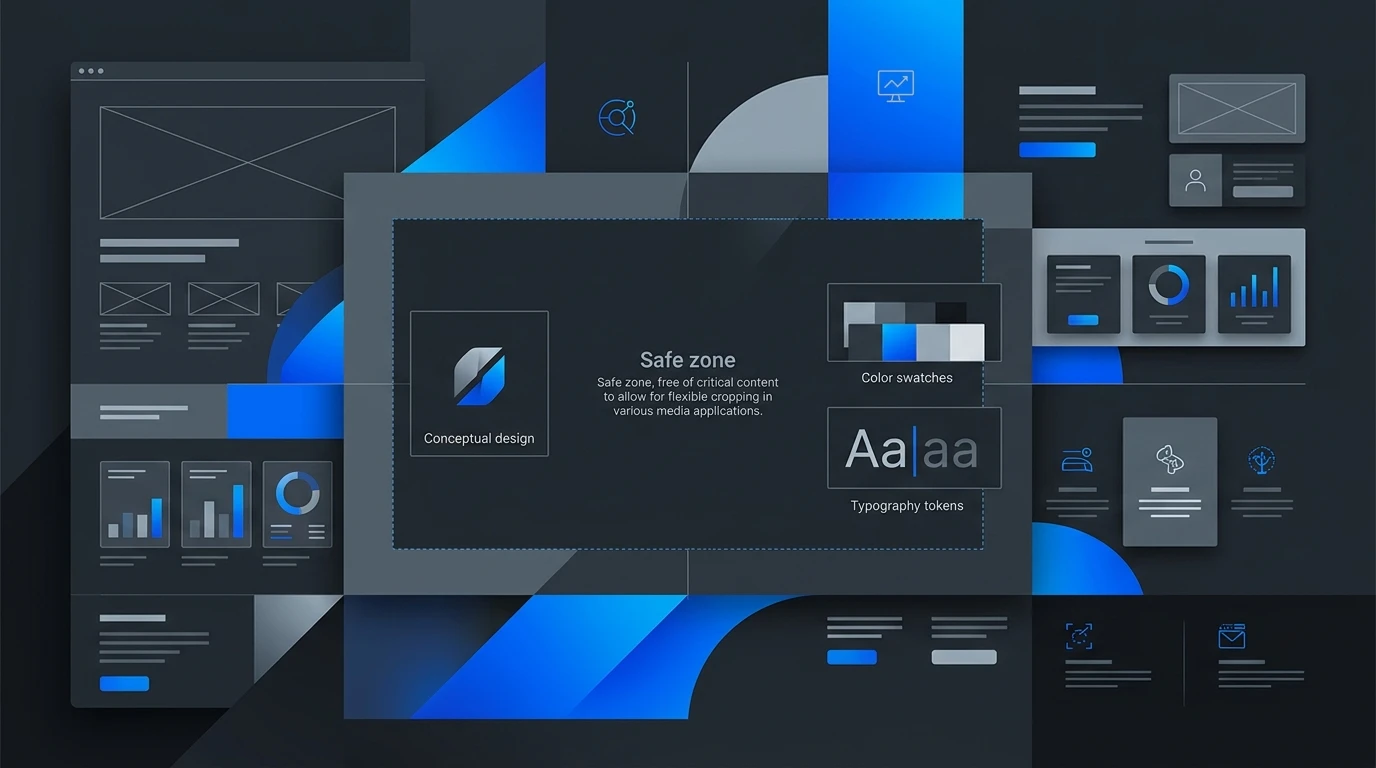
Typography plays an equally crucial role. The fonts you select determine how your written content feels to the reader. Serif fonts often communicate tradition and authority, making them popular among fintech and legal startups. Sans-serif fonts typically feel modern, approachable, and tech-forward. Select one or two complementary fonts and use them strictly across all your materials.
Color Palette
Colors evoke specific psychological responses. Blue frequently conveys trust, security, and calm, which explains its dominance in the corporate software world. Green aligns with growth, health, and sustainability. When choosing a color palette, consider the emotional response you want to trigger in your customers.
Limit your palette to a primary brand color, a secondary accent color, and a few neutral tones for text and backgrounds. Too many colors create visual clutter and dilute your brand recognition.
Consistency is the Key to Trust
A beautiful logo loses its power if it appears alongside random colors on your social media profiles. Trust relies on predictability. When a customer moves from your Instagram ad to your landing page, the transition should feel seamless.
Creating Brand Guidelines
The best way to maintain consistency is by establishing a brand guidelines document. This does not need to be a fifty-page manual. A simple PDF outlining your accepted color codes (HEX and RGB), font hierarchy, and rules for logo placement will keep your team aligned.
Whenever you hire a freelance designer or launch a new marketing campaign, hand them this document. Strict adherence to these rules ensures your startup looks unified and professional at every touchpoint.
The Pitfalls of Over-Branding
While visual identity is crucial, startups must balance branding efforts with agility. Some founders spend months agonizing over the perfect shade of yellow while their product launch is delayed.
Your brand will evolve. The logo you launch with might not be the logo you use five years from now, and that is perfectly acceptable. The goal of early-stage branding is to build enough trust to acquire your first wave of customers. Focus on creating a clean, professional baseline. You can refine the aesthetic once you gather actual user feedback and start generating revenue.
Launching Your Startup with Confidence
Creating a strong visual identity is a strategic investment in your company's future. By carefully selecting your design elements and applying them consistently, you signal to the market that your business is professional, reliable, and ready to solve their problems. That visual identity becomes even more valuable when it carries through to your web design system.
Review your current assets. Do your website, social channels, and pitch decks share a cohesive look? If you notice inconsistencies, take the time to realign them. A unified brand builds the trust necessary to turn curious visitors into loyal customers.